Ameen Akbar ← Back to work
A clinician listens to a patient's back with a stethoscope in a softly lit consultation room
Case study: Doctor Anywhere

Designing for continuity in chronic care

Many patients with chronic conditions understand their diagnosis but not what to do with it. This is the story of how we turned a one-off screening result into a care journey patients could actually follow.

Role
Design, UX strategy, research
Led
Discovery through to solution design
Team
1 PM, 1 GP, 2 designers
Client
Doctor Anywhere
Timeline
5 months
Platform
Mobile, Web
Tools
Figma, Miro, UX Army
Industry
Healthtech

Most patients leave a consultation with a result and a recommendation, then are largely on their own to interpret it, act on it, and stay on track. For Doctor Anywhere, this was bigger than any single feature: how might we support patients beyond the appointment itself, across the full arc of chronic care?

Understanding where chronic care breaks down

Before proposing anything, we needed to know where patients were actually getting stuck, and whether that matched what our doctors believed was happening. Research ran across three tracks in parallel: expert input, an audit of what DA already offered, and direct conversations with patients managing chronic conditions.

11
Patient interviews
20
Survey responses
2
Doctors consulted
5
Lifestyle experts

Expert insights

  • Clinical validation sessions with in-house doctors
  • A longevity conference on emerging health tech
  • A course on lifestyle medicine & food as medicine

Audit & benchmarking

  • Audited DA's current chronic-care offering
  • Mapped the user journey from research insights
  • Benchmarked competitors to find gaps worth owning

Understanding the user

  • 11 interviews with people managing chronic conditions
  • 20 survey responses for quantitative signal
  • Cross-referenced with internal and national health data
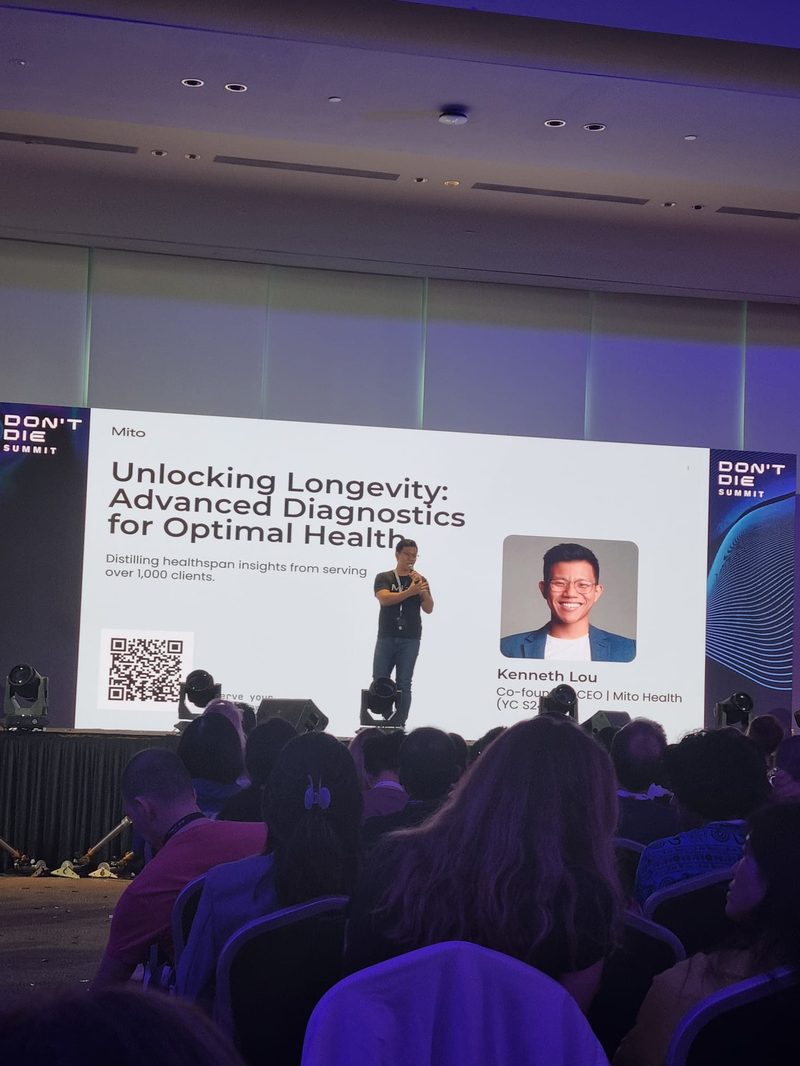
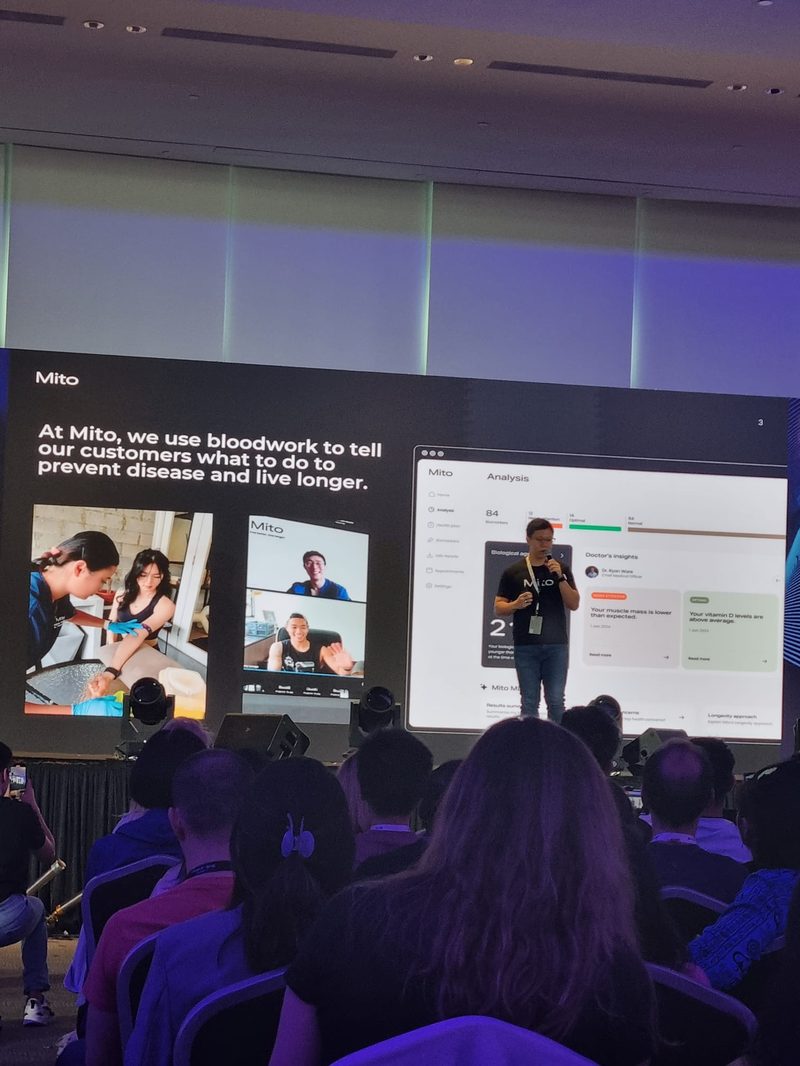
Kenneth Lou, Co-founder and CEO of Mito Health, presenting on advanced diagnostics for longevity at the Don't Die Summit
Expert talks: attended sessions on emerging health tech and longevity diagnostics at the Don't Die Summit, Singapore.
Mito Health presentation slide showing their biomarker analysis dashboard and blood sample collection process
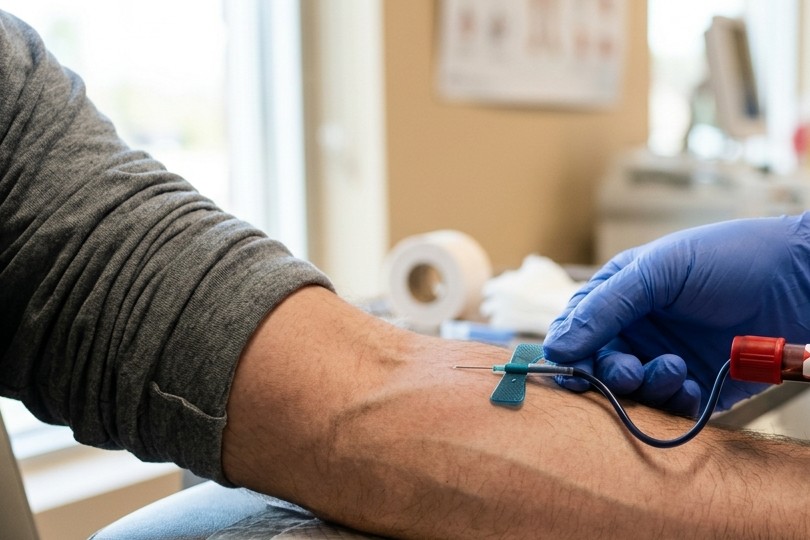
Close-up of a blood sample being drawn during a competitor's at-home health test
Competitor audit: went through Mito Health's own at-home blood test firsthand to benchmark their onboarding and results experience.
0 10 20 30 40 8.5 19.8 26.2 2010 8.8 24.2 35.5 2017 9.5 35.5 39 2020 8.5 37 31.9 2022
Diabetes Mellitus Hypertension Hyperlipidaemia
National context: prevalence (%) of key chronic conditions among Singapore residents aged 18–74, tracking upward since 2010. Source: Ministry of Health, National Population Health Survey, via SingStat Table Builder
These three conditions are the fastest-growing in Singapore's own health data, which is why they became the initial focus.

Three things kept getting in the way

Weak adherence, difficulty sustaining lifestyle change, and trust gaps in existing systems came up again and again, regardless of condition, age, or how engaged the patient was at the outset.

Patients often skip follow-up visits, relying instead on self-directed action from the initial advice they were given.
Competitors rarely connect screening data to lifestyle action, leaving a gap in continuity of care.
Some patients distrust Western medicine outright, turning to alternatives like TCM instead.
Family and friends play an outsized role in outcomes, especially around lifestyle adjustment.
DA already offers 37+ related products and services, but patients experience them as fragmented, which weakens continuity of care.
A small group of patients actively prioritise health through diet, exercise and sleep, an underused segment worth designing for.
4/5
Expressed interest in seeing the same doctor
3/5
Wanted clear action to take, not just a record

In their own words, from patient interviews:

Give me tips ah, give me an advice, right? Rather than this is like a medical record.
Findings · Chronic care research
Different doctors have differing opinions, so it's confusing when you review results with different doctors.
Findings · Chronic care research
Don't eat this, don't eat that. It became torture. Today you go to the hawker centre and everything has oil.
Findings · Chronic care research · DN

What we held ourselves to

These five principles came directly out of the research, and became the test every design decision had to pass.

Integrate data seamlessly

Screening results, consultations, and lifestyle insights should connect into a single flow.

Make actions tangible

Every result or recommendation should lead somewhere concrete: book a follow-up, track a metric, adjust a habit.

Personalise the experience

Recommendations should reflect the individual's health profile, condition, and actual readiness to change.

Support long-term engagement

Progress shouldn't end when the consultation does. Nudges and checkpoints keep it alive.

Communicate simply

Plain, supportive language and visuals, so results and next steps stay legible under stress.

Personalising plans

For each condition, we mapped which levers to emphasise and, just as importantly, which underlying driver would actually move someone to act on the plan.

High cholesterol
Levers emphasised
Medication Exercise Nutrition Tracking Sleep Stress
e.g. self walks/jogging, diet recommendations, supplements
MotivationProgress needed to feel visible and self-driven.
High blood pressure
Levers emphasised
Medication Exercise Nutrition Tracking Sleep Stress
e.g. BP monitoring, sleep education, TCM & mental health support
EducationUnderstanding the "why" mattered more than the nudge.
Diabetes + high cholesterol
Levers emphasised
Medication Exercise Nutrition Tracking Sleep Stress
e.g. pill & refill reminders, diet recommendations, BP/weight monitoring
Social & communityAdherence held up better when it wasn't a solo effort.

This model became the logic behind each action plan — what got recommended, and how it was framed, shifted with both the condition and what we'd learned would actually get someone to follow through.

Living with a condition, beyond the clinic

Our research showed patients feel overwhelmed right after receiving results, and struggle to sustain habits long after the appointment ends. We designed the journey around four connected moments.

Shared results review

  • Patient and doctor review results together, in person or by video
  • Results are simplified and given context

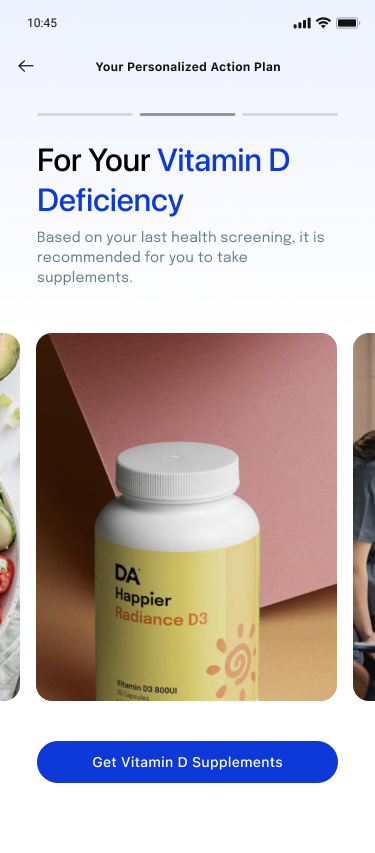
Personalised action plan

  • Results translate into a concrete plan: diet, exercise, medication, stress
  • A dashboard tracks trends without overwhelming the patient

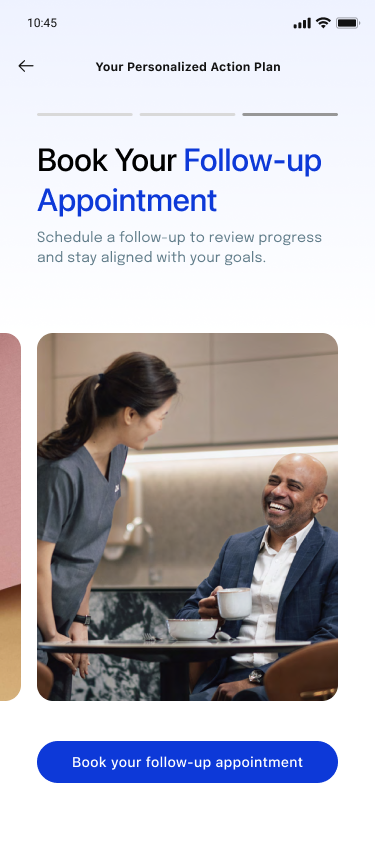
Proactive follow-ups

  • Patients are prompted to book their next consultation right after the plan is set
  • Automated reminders for retests and check-ins keep momentum

Lifestyle integration

  • Education and goal-setting tools support sustainable habits
  • Home-based screening and medication delivery remove friction

Mapping how doctor, patient and system interact

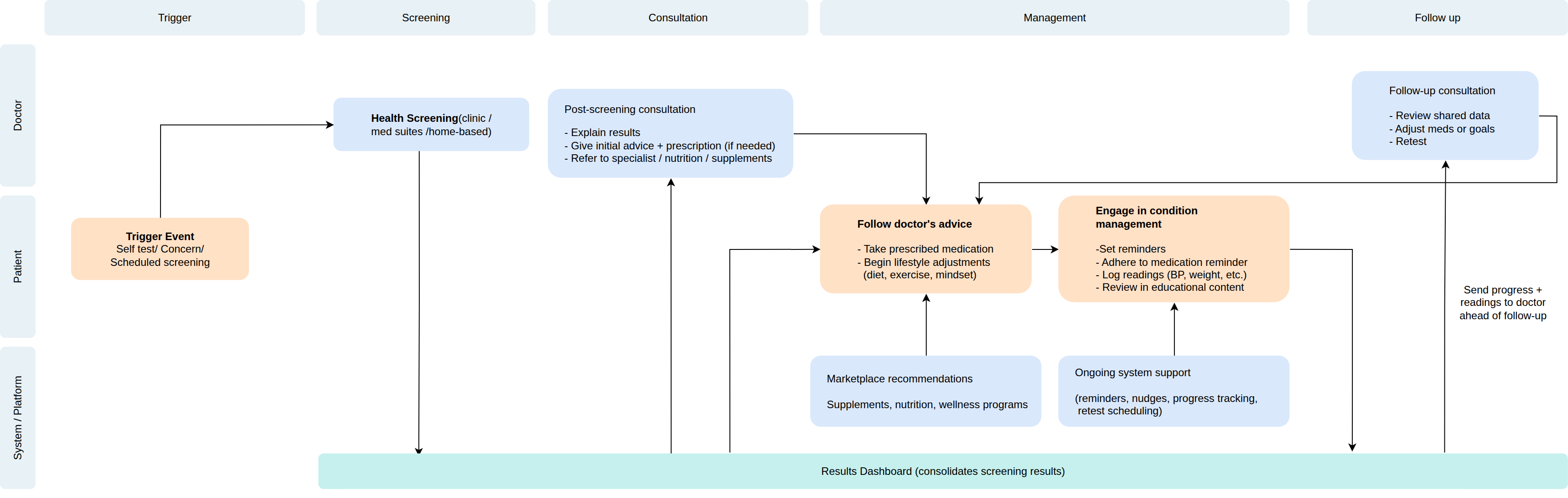
To make the journey actionable, we mapped how patients, doctors, and the platform interact at every stage of care. In this future state, the doctor's advice doesn't end when the consultation does. The system keeps supporting the patient through reminders, tracking, and marketplace recommendations drawn from DA's 37+ existing services, aligned to their plan instead of sitting fragmented across the app.

Service blueprint showing Doctor, Patient, and System/Platform lanes across the Trigger, Screening, Consultation, Management, and Follow-Up stages of the DA chronic care journey.
⤢ Click to zoom

Socialising the Vision

We created a set of storyboards to communicate the holistic care journey to upper management, weaving in real patient challenges and research insights to make the vision tangible and easy to relate to. This helped leadership quickly grasp the value of the experience and build alignment around it.

Doctor Anywhere
30m ago
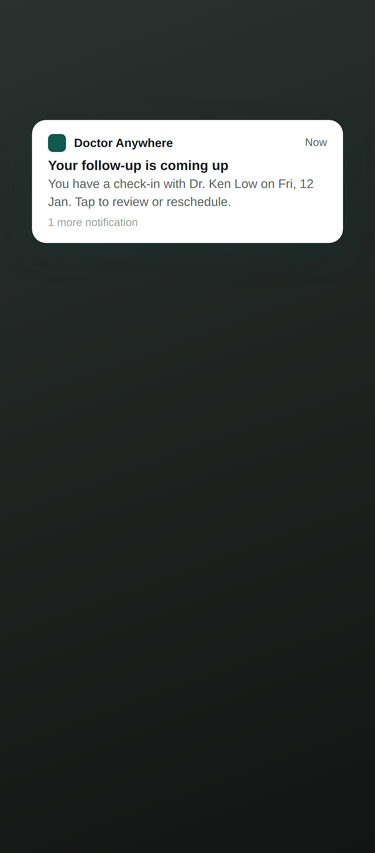
Your follow-up is coming up
You have a check-in with Dr. Ken Low next week. Tap to review or reschedule.
2 more notifications
Doctor Anywhere
30m ago
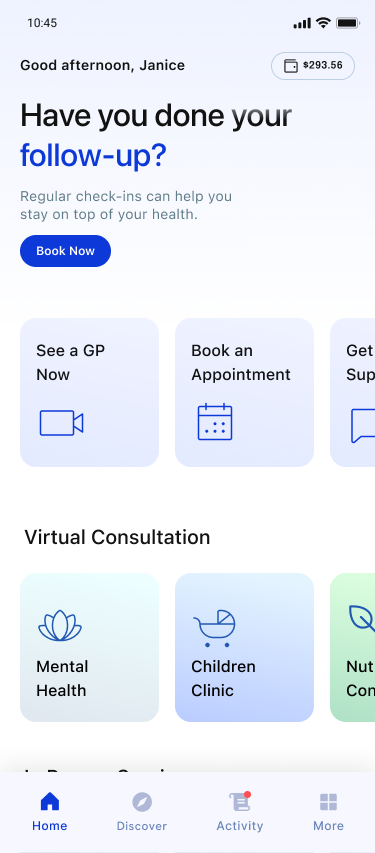
Have you done your follow-up?
Seeing your doctor at least twice a year can help you manage your condition better.
2 more notifications
Doctor Anywhere
30m ago
Running low on your medication?
We've noticed your supply might be running out soon. Top up now to stay on track with your care plan.
2 more notifications

From result to routine

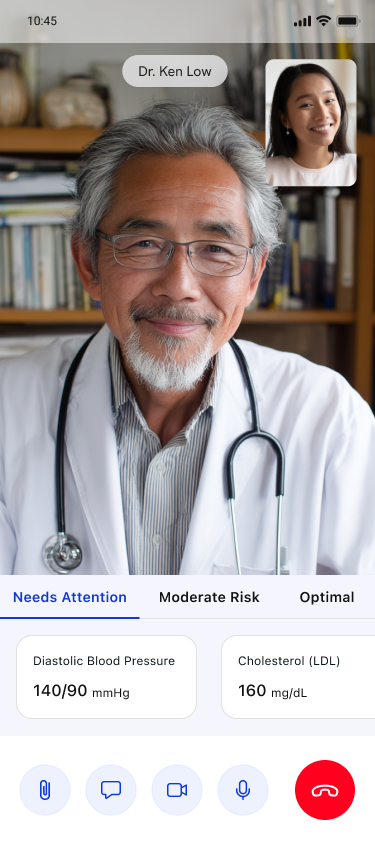
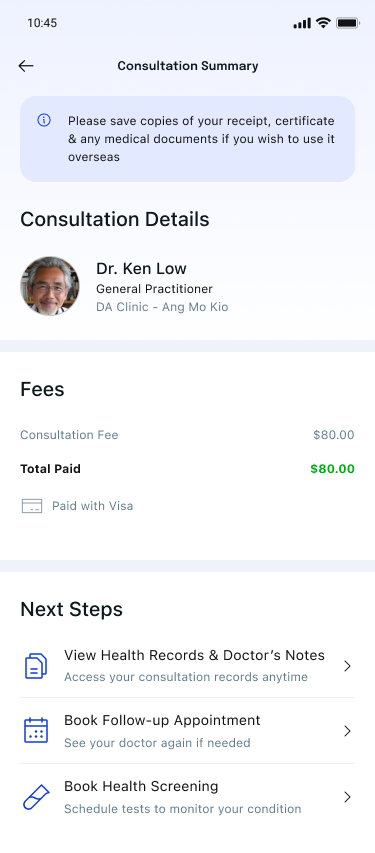
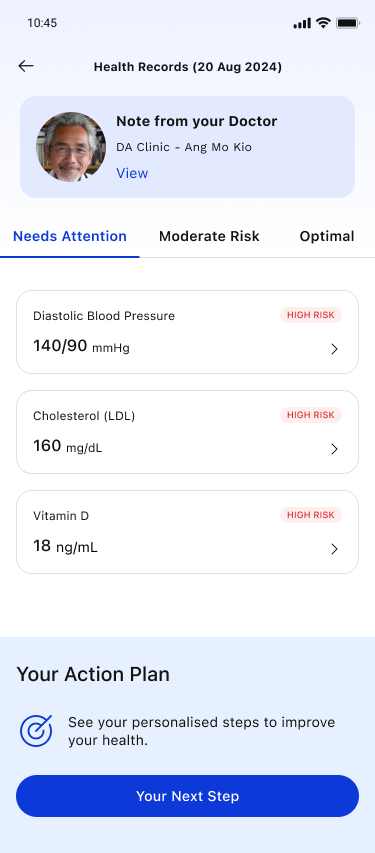
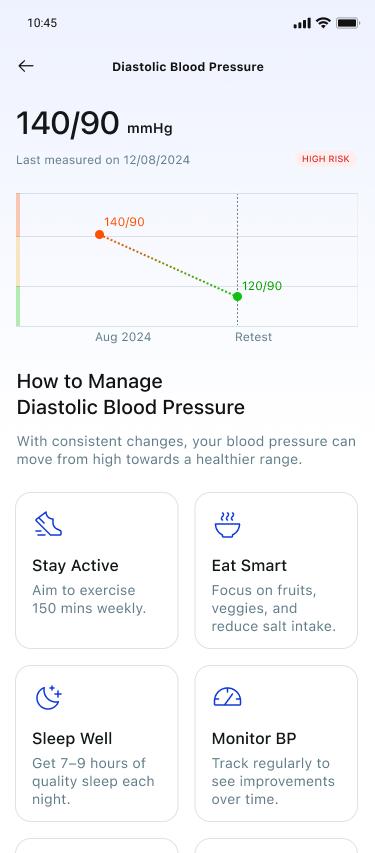
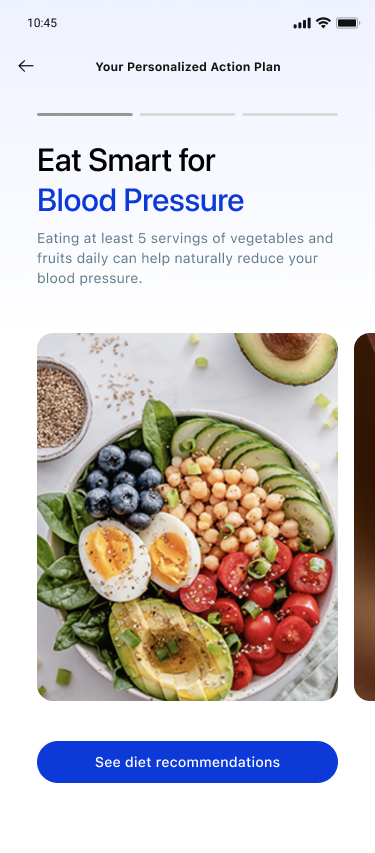
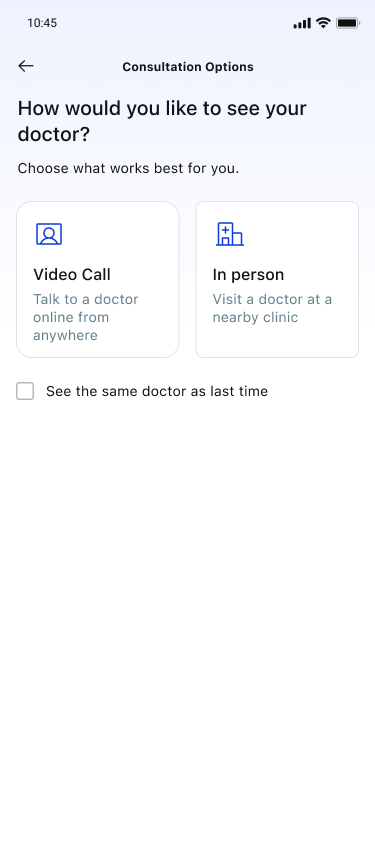
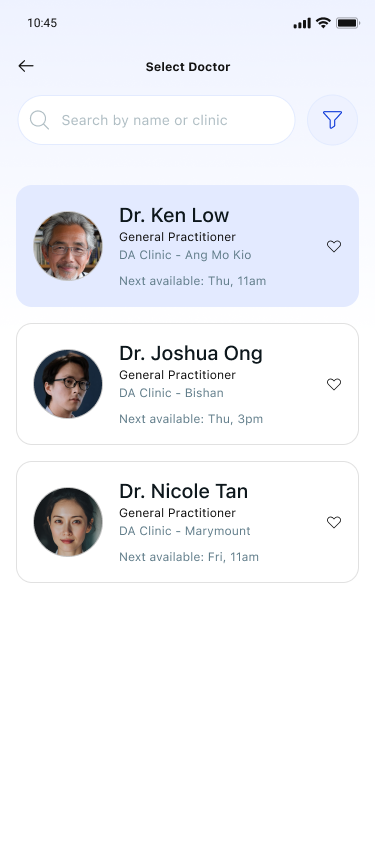
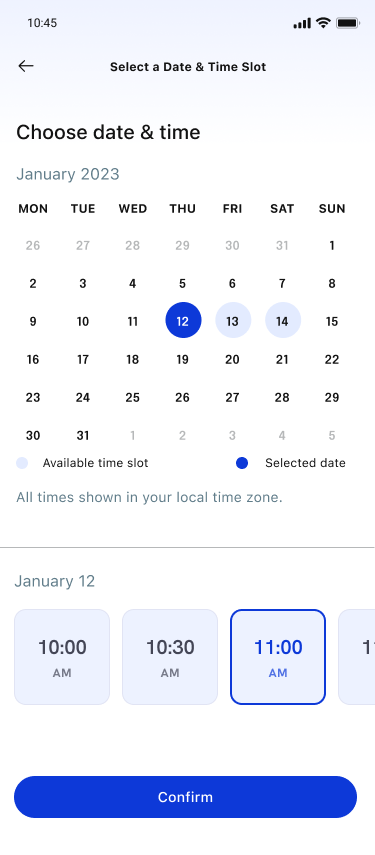
The vision translated into working flows: patient and doctor reviewing results together, and a personalised action plan with clear next steps. Doctors set a follow-up together with the patient, with a reminder sent ahead of it, and patients can choose to see the same doctor on upcoming appointments. Reminders also cover medication top-ups, so patients stay on track before they fall behind.

What this makes possible

Follow-up booking, reminders, and same-doctor continuity are live today. The research also gave the care team the validation to roll out home-based health screening, and gave management a clearer picture of what patients actually want beyond medication and lab reports. The numbers below are projections drawn from that research and our existing patient usage data, showing what we'd expect once results, consultations, and recommendations are fully connected.

Modeled projections
+15–20%

Increase in follow-up appointment rates, by embedding booking directly after the results review.

8–12%

Of patients estimated likely to purchase condition-related products when a recommendation is surfaced at the right moment, building on demand patients were already meeting elsewhere.

Directional benefits

Same doctor every visit

Seeing the same doctor builds trust and familiarity over time, and keeps advice consistent. Patients told us switching doctors often meant conflicting guidance, even when records were shared.

Calmer patients, clearer next steps

Reduced patient anxiety and confusion by simplifying results and providing a personalised action plan.

Easier access to complementary care

Better support for complementary services like nutritionists or TCM, drawing on DA's 37+ existing offerings and surfacing them as optional resources within the flow rather than a separate search.

What this taught me

This project helped me understand what patients actually need in a moment of overwhelm. They need fewer things to read and clear steps they can act on. Simplifying results, embedding follow-up booking, and connecting everything to lifestyle adjustment gave both patients and doctors a journey that felt cohesive and connected.

The next step is measuring real adoption. Follow-up bookings and turnout, use of complementary products and services, and marketplace engagement will show where the solution works and where it needs to evolve.

More broadly, this work strengthened my ability to design at the intersection of user needs, clinical workflow, and business outcomes, and reinforced how much long-term engagement has to be designed for deliberately.